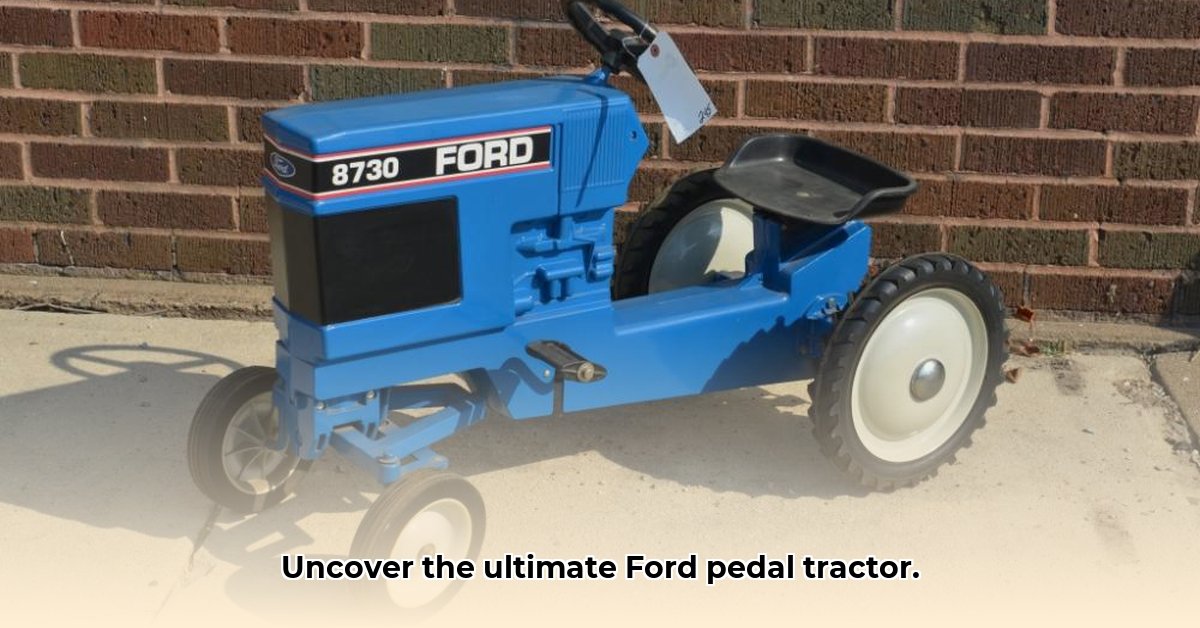
Pedal Tractor Ford: A Collector's Guide to Finding Your Dream Machine
The world of collectible Ford pedal tractors offers a captivating blend of nostalgia and exciting market dynamics. These aren't just toys; they're miniature works of art, representing a piece of American agricultural history and sparking passion in collectors worldwide. This guide will equip you with the knowledge to navigate this specialized market, whether you're a seasoned collector or just beginning your journey. For additional resources, check out this helpful site on Ford pedal tractors.
Market Overview: More Than Just a Toy
The market for vintage Ford pedal tractors is experiencing robust growth, driven by several key factors. Nostalgia plays a significant role, with many adults recalling fond childhood memories associated with these sturdy toys. The limited supply of these vintage items, many produced decades ago, further contributes to increased value. Finally, a passionate and active collector base fuels the market's dynamism.
However, this thriving market presents its challenges. Pinpointing the precise value of a pedal tractor requires careful consideration. Model (an 8N is generally more desirable than a 9N), condition (a pristine tractor fetches a much higher price than a rusty one), and the presence of original accessories all significantly impact a tractor's worth. A perfectly restored, original 8N, for instance, commands a hefty premium compared to a more common model needing restoration. Don't forget the importance of authenticity—counterfeit tractors exist, making careful assessment crucial.
Authenticity and Valuation: Separating the Wheat from the Chaff
Authenticity is paramount. Before considering price, ensure your potential purchase is a genuine vintage Ford pedal tractor. A detailed inspection is crucial. Scrutinize the paint—is it original, or a later repaint? Examine decals for fading, chipping, or signs of professional replacement. The overall construction should reflect the manufacturing techniques of its era. Subtle details, such as the type of metal, weld quality, and screw placement, provide essential clues.
Identifying a genuine Ford pedal tractor demands research. Familiarize yourself with model variations across different years. Compare your potential acquisition with known authentic examples found in online databases, collector forums, and auction listings. Don't hesitate to consult experienced collectors or experts for guidance; their expertise can save you from costly mistakes.
Pricing is equally complex. While precise figures are elusive due to numerous variables, research recent sales of comparable models in similar condition. Online auction sites offer valuable data, but remember to include shipping and fees. Compare across multiple platforms to ensure you're not overpaying. Always negotiate reasonably, especially for tractors requiring restoration. "Knowing the market is half the battle," says John Miller, Veteran Collector and Appraiser at the National Toy Collectors Association.
Building Your Pedal Tractor Ford Collection: A Collector's Guide
Targeted Research: Begin by researching highly valued models. The 8N and 9N are frequently cited, but other rare and valuable models exist. Identify characteristics that enhance desirability and value—rarity, original paint, original accessories, or other unique features. Is it truly a rare find, or a more common item?
Auction Trend Tracking: Regularly monitor online auction sites (like eBay) and specialized vintage toy auctions. Track sales of similar tractors to gain real-time insights into pricing and demand trends. What's the current market telling you?
Condition is King: A well-preserved, original tractor is vastly more valuable than one needing restoration. Restoration is costly and time-consuming. Prioritize pristine examples for long-term value. Is it worth the investment, or should you keep searching?
Community Building: Join online forums and collector groups dedicated to vintage toys or agricultural equipment. These networks offer access to rare finds, expert advice, and a supportive community. What can you learn from experienced collectors?
Selling Your Ford Pedal Tractor: Maximizing Your Return
Detailed Descriptions: Be meticulous in describing the tractor's condition. Use precise language and avoid glossing over flaws. Be upfront and honest; highlight unique features or historical significance. What makes your tractor special?
High-Quality Photography: Invest in professional-quality photos. Showcase the tractor from multiple angles with good lighting, using close-ups to highlight details (both strengths and imperfections). How will your high-quality images make it stand out?
Accurate Model Identification: Clearly identify the model and year. Inaccurate identification deters buyers. Seek expert confirmation if uncertain. Will buyers trust your data?
Competitive Pricing: Research recent sales of comparable tractors. Price competitively; undercutting the market can attract buyers. Overpricing hinders sales. What’s the sweet spot for your price?
Managing the Risks: Protecting Your Investment
| Risk Factor | Mitigation Strategies |
|---|---|
| Counterfeit Tractors | Thorough inspection, buying from reputable sellers. |
| Overpaying | Extensive market research, comparing listings, effective negotiation. |
| Shipping Damage | Robust packaging, reputable shipping service, insurance. |
| Market Fluctuations | Diversify investments, stay informed about market trends. |
The Future of Ford Pedal Tractor Collecting
The future of Ford pedal tractor collecting remains bright. Nostalgia continues to fuel interest, and the limited supply of authentic tractors indicates that these collectibles will likely retain their value. Continued growth is expected, particularly among passionate individual collectors. However, informed collecting and careful buying decisions remain crucial. The more you know, the better equipped you are to make astute choices.